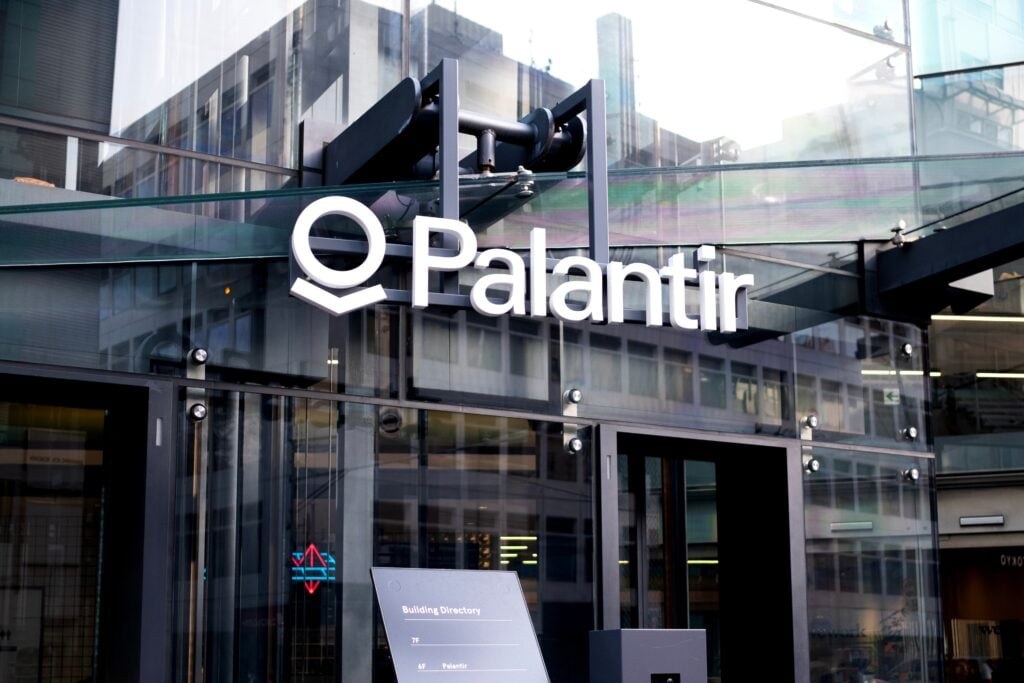
On Monday, speaking during Palantir’s second-quarter 2026 earnings, Karp said the company’s outsider status created significant challenges during its first 18 years but may now be turning into a long-term advantage.
"We know we need the best results because people aren’t buying our product because we’re swinging the golf club correctly or paying for the steak dinner," Karp said. "They don’t even invite us to steak dinners."
Karp suggested that Palantir could not rely on the traditional relationship-building tactics often associated with the technology industry. Instead, the company had to prove the value of its software through measurable outcomes for customers.
That pressure, he said, shaped Palantir’s culture and helped differentiate it from companies that rely on established business playbooks.
Karp said being an outsider came with "huge problems" during Palantir’s early years.
However, he believes the same position could create meaningful benefits over the company’s next chapter as demand for AI software grows.
"Other people don’t like being outsiders," Karp said. "In fact, I’m struggling with our current popularity."
Karp’s remarks came as Palantir executives argued that the company’s approach to AI has positioned it ahead of many traditional software providers.
CTO Shyam Sankar said enterprises are increasingly recognizing that the value created by AI extends beyond proprietary data. Companies must also consider who controls the metadata, reasoning processes and operational insights generated as AI systems are deployed.
Palantir executives believe its focus on applying AI to complex, real-world problems — rather than simply following conventional software models — has become a key competitive advantage.
Palantir reported second-quarter revenue of $1.94 billion and adjusted earnings of 41 cents per share, beating Wall Street estimates of $1.80 billion and 35 cents, respectively.
The company generated $1.22 billion in operating cash flow and adjusted free cash flow and ended the quarter with approximately $9.2 billion in cash, cash equivalents and short-term U.S. Treasury securities.
For the third quarter, Palantir expects revenue of $2.16 billion to $2.164 billion, above estimates of $1.997 billion.
It also raised its full-year 2026 revenue outlook to $8.15 billion to $8.16 billion from $7.65 billion to $7.66 billion, surpassing the $7.69 billion consensus estimate.
Price Action: Palantir shares closed Monday’s regular session at $125.65, up 2.10%, before surging 14.97% to $144.45 in after-hours trading, according to Benzinga Pro.
Benzinga Edge Rankings place Palantir in the 98th percentile for Growth, even as the stock maintains a negative price trend across the short-, medium- and long-term.
Disclaimer: This content was partially produced with the help of AI tools and was reviewed and published by Benzinga editors.
© 2026 Benzinga.com. Benzinga does not provide investment advice. All rights reserved.
To add Benzinga News as your preferred source on Google, click here.