For a few minutes, Wall Street thought it knew the script.
The Federal Reserve left interest rates unchanged at 3.50%-3.75% in a notable 9-3 vote split. The policy statement offered few surprises. Stocks initially moved higher, suggesting investors saw little reason to rethink the outlook.
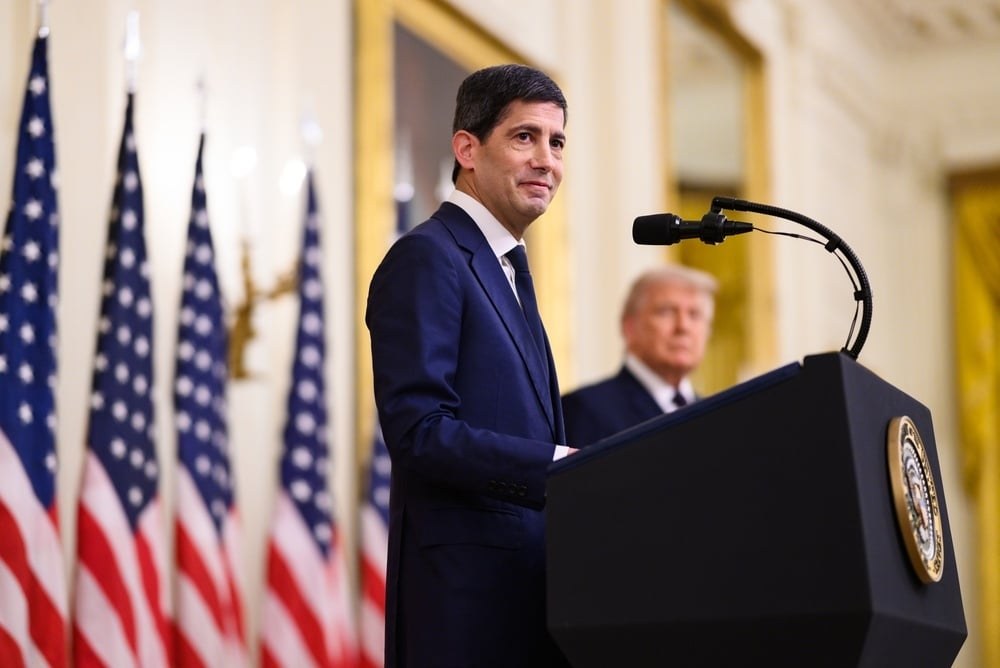
Then Fed Chair Kevin Warsh started answering questions.
By the time the new Fed chair walked away from the podium, the mood had completely changed.
The policy decision hadn’t changed. Investors’ understanding of the new Federal Reserve had.
“There is no soft inflation target. There is no soft implicit target… There’s only a target and it’s 2%,” Warsh stated.
The remarks left little doubt that the Fed has no intention of declaring victory after one encouraging inflation report.
Warsh reminded investors that inflation has remained above target for more than five years and warned that restoring price stability will take much longer than a few months.
“The five-plus years of inflation above target cannot be cured in nine weeks or by a single month of modest price decreases.”
When asked whether June’s softer inflation reading persuaded policymakers to hold rates steady, his answer was equally blunt.
But they weren’t the most important message.
Buried inside the press conference was a much bigger shift.
For nearly two decades, the Federal Reserve tried to steer markets through forward guidance, projections and carefully crafted communication.
He repeatedly argued that markets should react to incoming economic data—not to hints from central bankers.
“Market participants are learning to play the ball, not the referee.”
He called that development “a change for the better.”
Warsh even welcomed the fact that Treasury yields have climbed significantly since the previous FOMC meeting despite the Fed doing nothing with policy rates.
Instead of trying to suppress that market reaction, he said the Fed is deliberately stepping back to observe it.
“We’re interested in the reaction of financial markets,” he said.
That philosophy helps explain Wednesday’s unusual cross-asset moves.
Stocks weakened as investors absorbed the Fed’s unwavering commitment to restoring 2% inflation.
The Nasdaq 100 and S&P 500 surrendered all of their gains.
Rather than guiding investors toward a preferred outcome, Warsh appears willing to let markets debate those possibilities on their own.
He also made clear the Fed won’t simply validate whatever traders price in.
“We’re not going to be constrained by market prices… but markets can be a very good source of information.”
Investors spent years trying to anticipate every nuance of Fed communication.
Warsh may be trying to make that strategy obsolete.